10 Container Gardening Ideas for Small Spaces
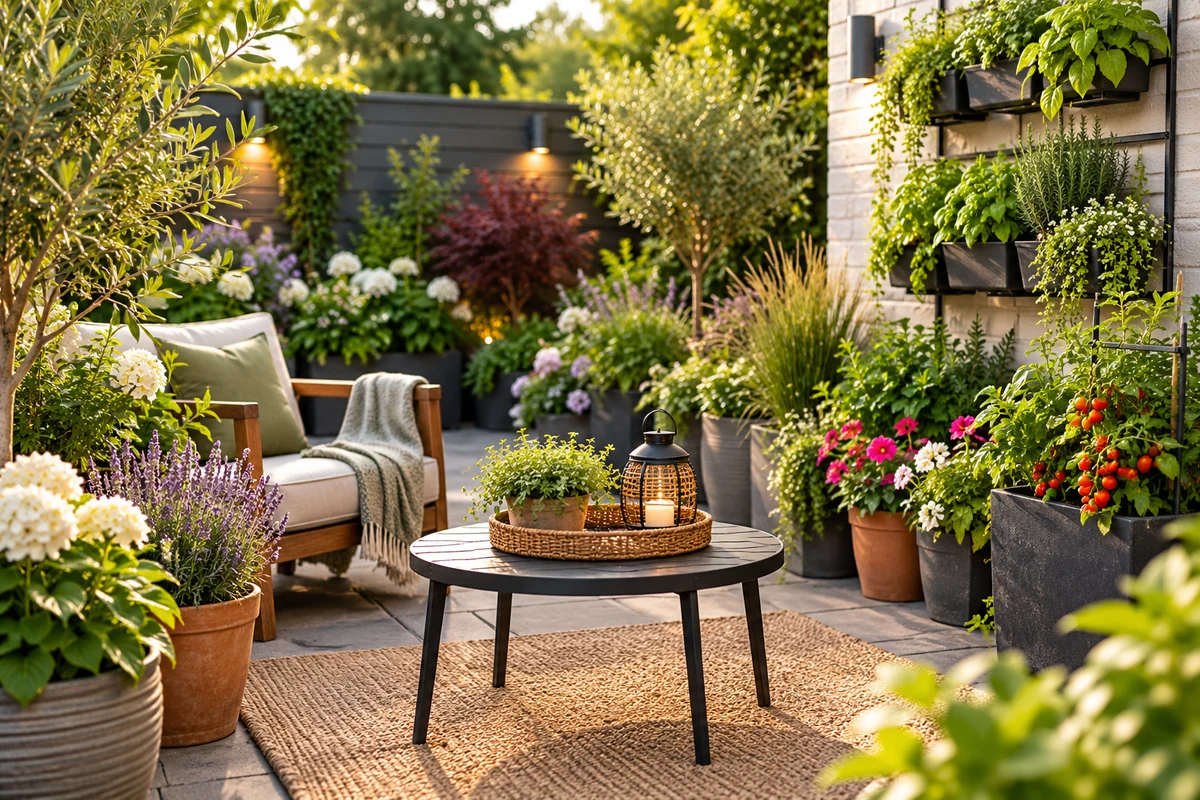
Container gardening is one of the easiest ways to bring more plants into a small outdoor space.
You don’t need a large garden, raised beds or even much ground space. With the right pots and planters, you can grow herbs, flowers, vegetables and small shrubs on a patio, balcony or compact backyard.
Containers also give you more control over where plants are positioned. You can move them to catch more sunlight, group them together for impact or rearrange the garden whenever you want a change.
Here are 10 practical container gardening ideas that work especially well in smaller spaces.
1. Create a Compact Herb Garden
Herbs are one of the best things to grow in containers because they don’t need much room and you can use them in the kitchen.
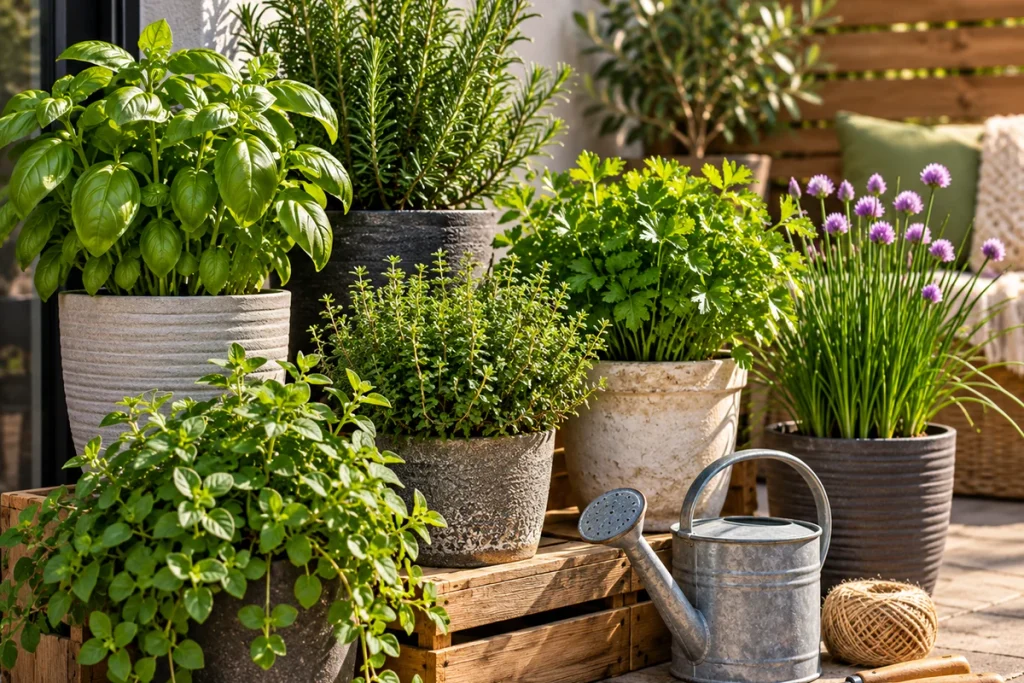
Basil, parsley, thyme, rosemary, chives and oregano all grow well in pots when given the right conditions.
Instead of spreading lots of individual pots around the patio, try grouping several together in one sunny corner. Using containers in similar colors or materials helps the display feel more organized.
You can also use a raised herb planter if you prefer not to bend down when watering or harvesting.
Keep mint in its own container because it can spread quickly and compete with other plants.
Garden Find
2. Use Tiered Planters to Save Floor Space
When space is limited, think vertically.
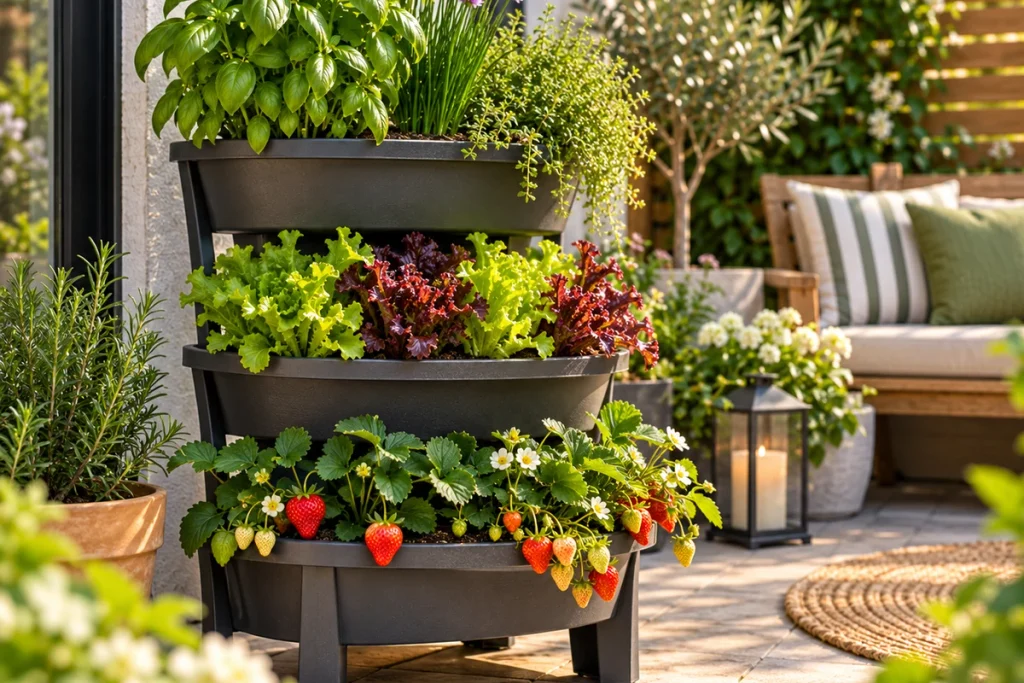
A tiered planter allows you to grow several plants while using only a small amount of patio or balcony floor space.
These work especially well for herbs, strawberries, lettuce and compact flowering plants.
Place taller plants on the upper levels and trailing plants lower down so they can spill naturally over the edges.
Before buying one, check the overall dimensions. Some tiered planters look compact online but can take up more room than expected once fully assembled.
Garden Find
3. Grow Vegetables in Containers
You don’t need a traditional vegetable patch to grow your own food.
Many vegetables grow surprisingly well in pots, including:
- tomatoes
- peppers
- lettuce
- radishes
- carrots
- dwarf beans
- salad leaves
The important thing is choosing a container that is large enough for the roots.
Tomatoes and peppers generally need deeper pots, while lettuce and salad leaves can grow in shallower containers.
Make sure every pot has drainage holes so excess water can escape.
Vegetable containers also tend to dry out faster than garden soil, so check them regularly during warm weather.
4. Add Flowers for Instant Color
Containers make it easy to add seasonal color without redesigning the whole garden.
Use flowering plants around seating areas, beside doors or along plain fences to make a small patio feel more welcoming.
Rather than mixing lots of unrelated colors, choose two or three that work together.
White, pale pink and purple create a softer look, while reds, oranges and yellows produce something much brighter.
You can also mix flowering plants with greenery for a more natural effect.
Petunias, geraniums, begonias and trailing lobelia are popular choices for containers, depending on your climate and light conditions.
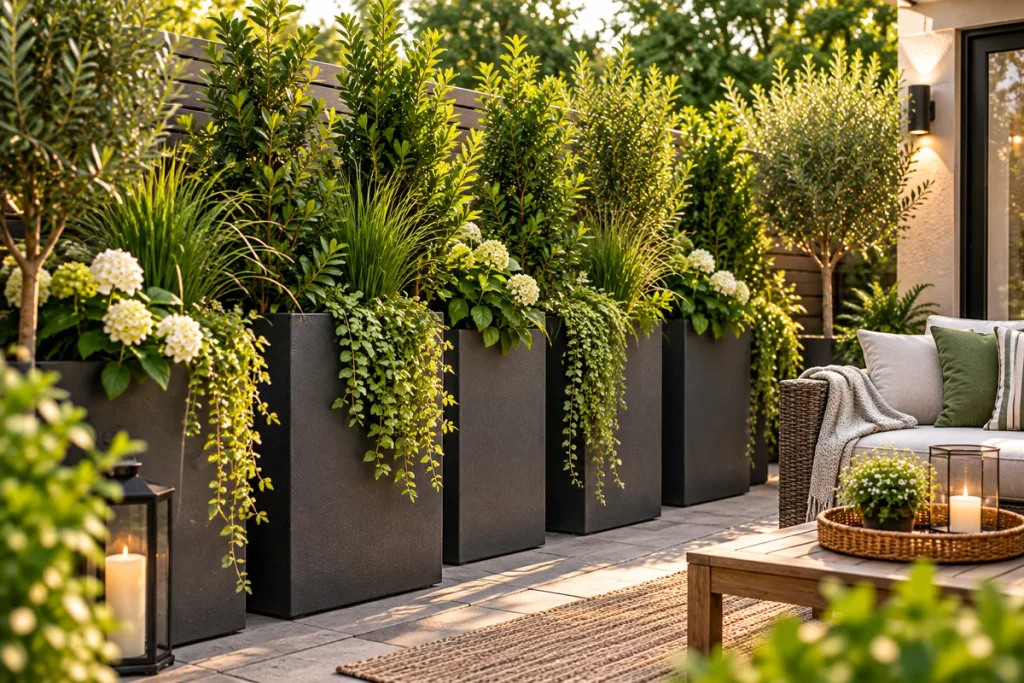
5. Use Tall Planters to Create Privacy
Tall containers can help screen a patio without taking up as much space as a hedge or large garden bed.
Place them along the edge of a seating area or anywhere you need extra privacy.
Suitable plants might include ornamental grasses, compact evergreen shrubs or bamboo varieties that are appropriate for containers.
Using several matching tall planters creates a cleaner look than lots of different pots.
Just remember that taller containers can become top-heavy, particularly in windy areas, so choose sturdy designs and position them carefully.
Garden Find
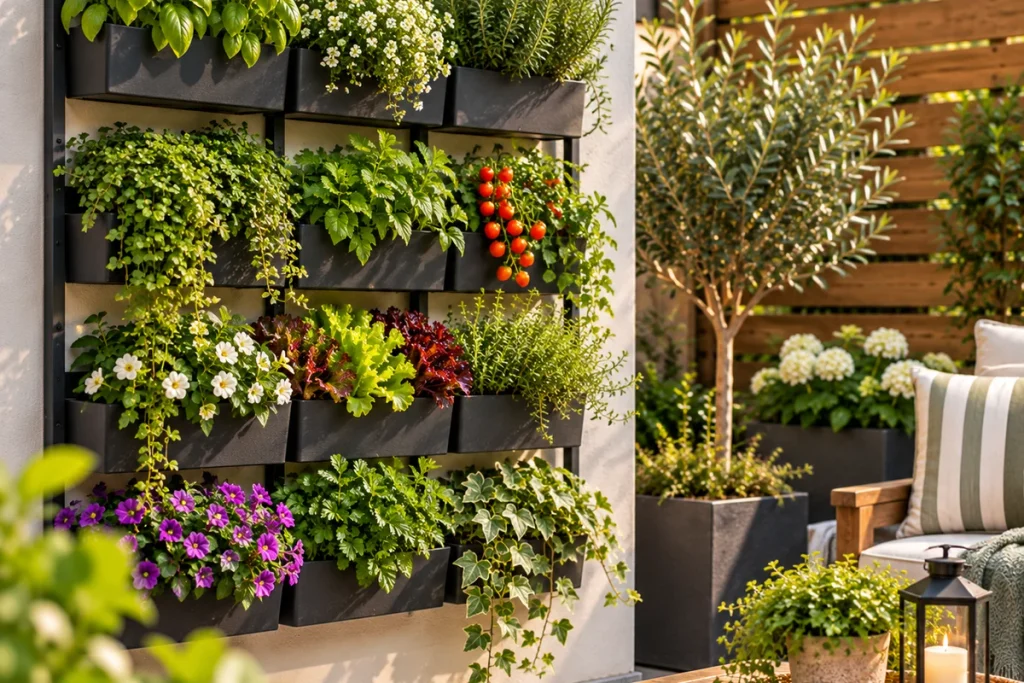
6. Try a Vertical Wall Planter
A bare wall or fence can become useful growing space.
Wall-mounted planters are ideal for herbs, small flowers and trailing plants because they keep the floor clear.
You can create a full living-wall effect or keep things simple with just two or three rows of planting pockets.
If you’re renting and don’t want to drill into a wall or fence, look for a freestanding vertical planter instead.
Make sure the plants at the top don’t block too much light from those below.
Vertical planters also need careful watering because upper containers can dry faster than lower ones.
7. Grow Strawberries in Pots
Strawberries are particularly well suited to container gardening.
They don’t need a huge amount of space, and keeping the fruit above ground can make it easier to protect from soil splash.
Use a wide planter, hanging basket or strawberry pot with several planting openings.
Position the container somewhere sunny and water consistently during fruiting.
Trailing strawberry plants also look attractive spilling over the edges of pots.
If birds are a problem in your garden, lightweight netting can help protect the fruit as it ripens.
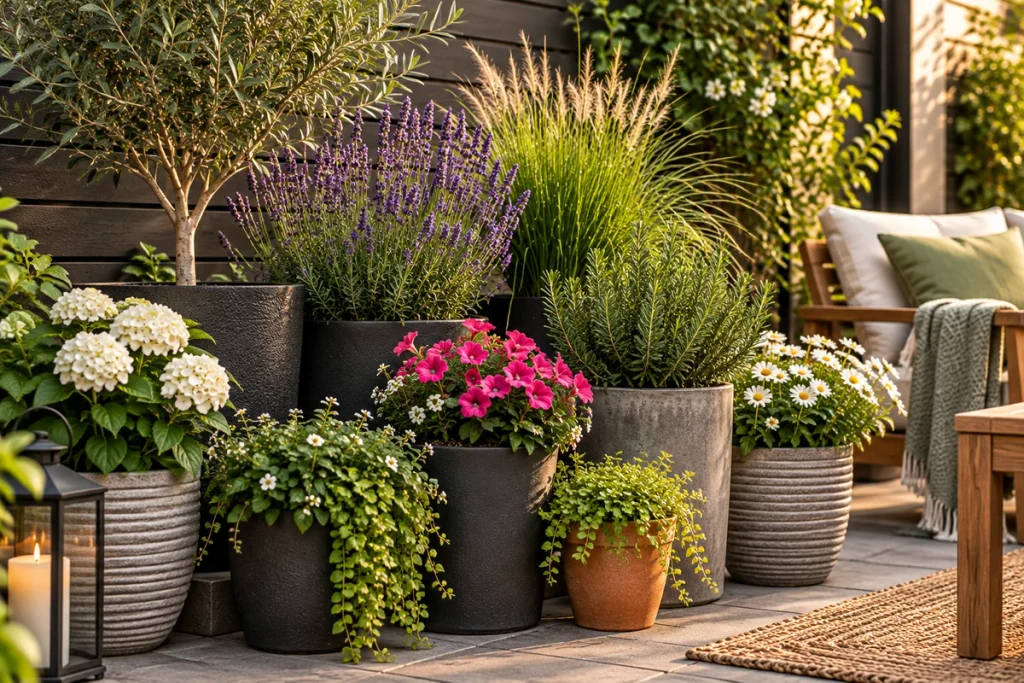
8. Group Containers in Different Heights
One of the easiest ways to make a container display look professionally arranged is to vary the height.
Put a tall plant at the back, medium pots in the middle and smaller or trailing plants toward the front.
You can also use plant stands to raise some containers rather than buying completely different pots.
Odd-numbered groups, such as three or five planters, often look more natural than lining everything up in a straight row.
Try repeating one color or material across the group so the arrangement still feels connected.
This works particularly well in patio corners where you want to create a focal point without filling the entire space.
9. Choose Pots That Suit the Space
The container itself has a big effect on how a small garden looks.
Lots of tiny mismatched pots can quickly make a patio feel cluttered.
Instead, use a smaller number of medium and large containers in complementary finishes.
Natural terracotta creates a relaxed garden feel, while charcoal, black and concrete-effect planters suit more contemporary spaces.
Lightweight pots are useful if you regularly rearrange your garden.
Whatever material you choose, make sure the containers have adequate drainage.
A decorative planter may look great, but plants won’t thrive if water collects around the roots.
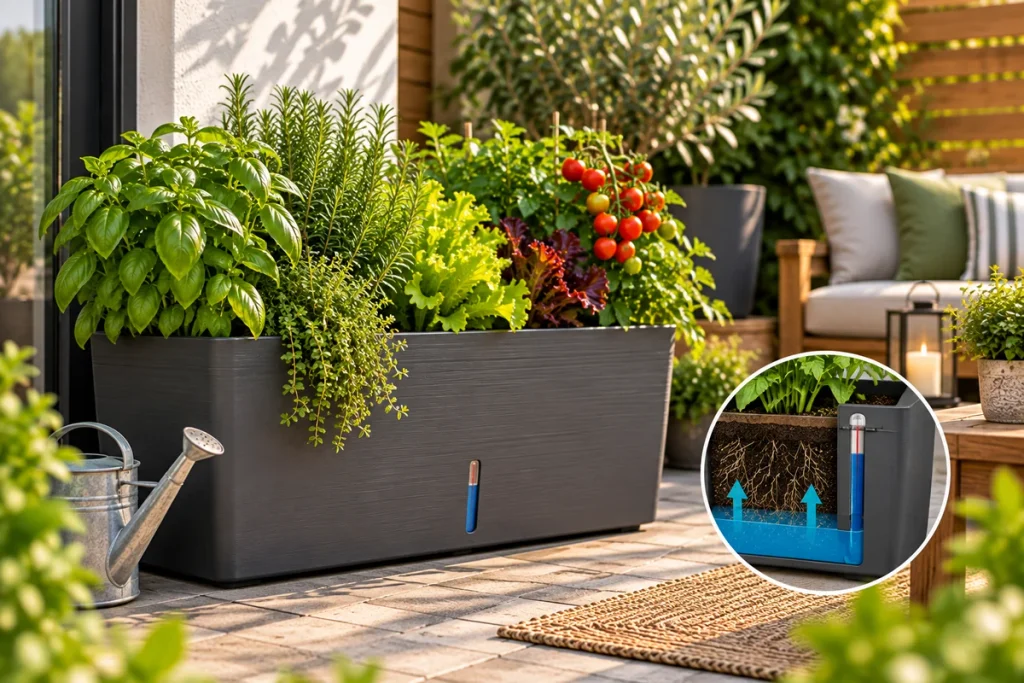
10. Add a Self-Watering Planter
Containers can dry out quickly in warm weather, particularly on sunny patios.
A self-watering planter has a reservoir beneath the soil that allows plants to draw up moisture gradually.
This can be useful if you’re away from home during the day or simply want to reduce how often you need to water.
They work particularly well for herbs, salad crops and some vegetables.
They don’t remove the need to check your plants completely, but they can make maintaining a container garden much easier.
Always follow the instructions for the particular planter because reservoir sizes and watering systems vary.
Garden Find
Final Thoughts
Container gardening is one of the simplest ways to make more of a small outdoor space.
You can start with just a few pots and gradually build the garden as you discover which plants grow best in your conditions.
Focus first on the things you’ll enjoy most.
If you like cooking, start with herbs. If you want more color, concentrate on flowers. If privacy is the main problem, invest in taller planters and screening plants.
The biggest advantage of container gardening is flexibility.
You can move plants, change the layout and experiment with different combinations without committing to a major garden redesign.
A few carefully chosen containers can turn even a small patio or backyard into a much greener and more enjoyable place to spend time.
This post contains affiliate links. As an Amazon Associate, Little Yard Living earns from qualifying purchases at no extra cost to you.